
Destination Development
Ensuring a sustainable future for all

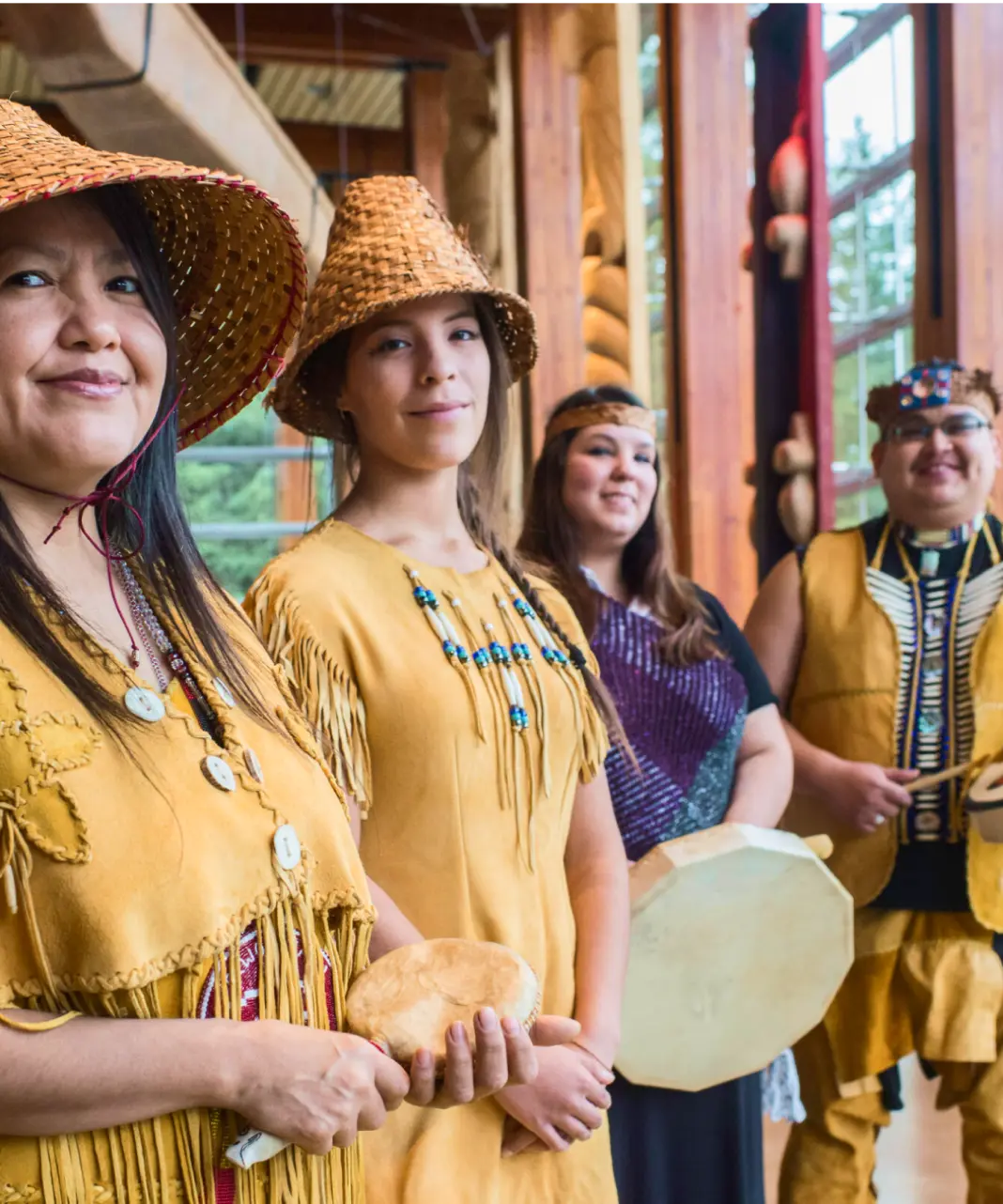
Where strategy influences accountability
Destination Vancouver is committed to take an active role in our efforts to balance the environmental, social, cultural and economic contribution of tourism to the wellbeing of our communities. We are dedicated to setting the standards for our team & our industry to foster shared values aligned with our communities. We will share and promote destination values with visitors to ensure their visit has contributed to their wellbeing and the wellbeing of the city.

OUR PARTNERS
Strategic partnerships
driving success
Destination management organizations
We work with other destination management organizations at the regional, provincial, and national level.
Tourism partners
Collectively, our tourism partners work to maintain high tourism standards, ensure efficient transportation, preserve natural attractions, and promote sustainable practices.
Community economic development organizations
Various business improvement associations in Vancouver provide services to expand local businesses, work towards strategic infrastructure, and enhance communities.
Commercial partners
Our commercial partners are centred around promoting and enhancing the restaurant industry in Vancouver, creating opportunities for communities to engage with culinary experiences.
Strategic partners
These partners enrich Vancouver’s economic and cultural landscape by driving tourism through major events, supporting local businesses, and fostering innovation with partnerships.
Policy & advocacy partners
These partners support key decision makers, implement and uphold legislation and policies, and advocate for BC’s visitor economy and accommodation industry.
Members
Our 800+ members are established businesses looking to further tourism in Vancouver through networking opportunities and tourism insights.
Memberships
We partner with industry-leading organizations to provide membership opportunities to advance sustainable tourism and enhance the business events industry in Vancouver.
OUR PARTNERS
Championing a
sustainable city

Vancouver has measured it's corporate greenhouse gas emissions since the benchmark year of 2016. We have set a target and a plan to keep emissions below 50% of the 2016 levels by 2030. We work with our partners to improve air quality, value potable water and material resources using circular economy principles.

Destination Vancouver seeks a tourism economy that supports the social and cultural wellbeing of our communities. For example, partnerships with the Chinatown Foundation and Indigenous Tourism BC to create opportunities for cultural tourism.

We support tourism-related economic efforts, including hotel demand and development. Our engagement spans across key councils such as the Hotel Development Taskforce, Metro Vancouver Destination Development Council, and Metro Vancouver Hotel Working Group.
Committed to
positive evolution
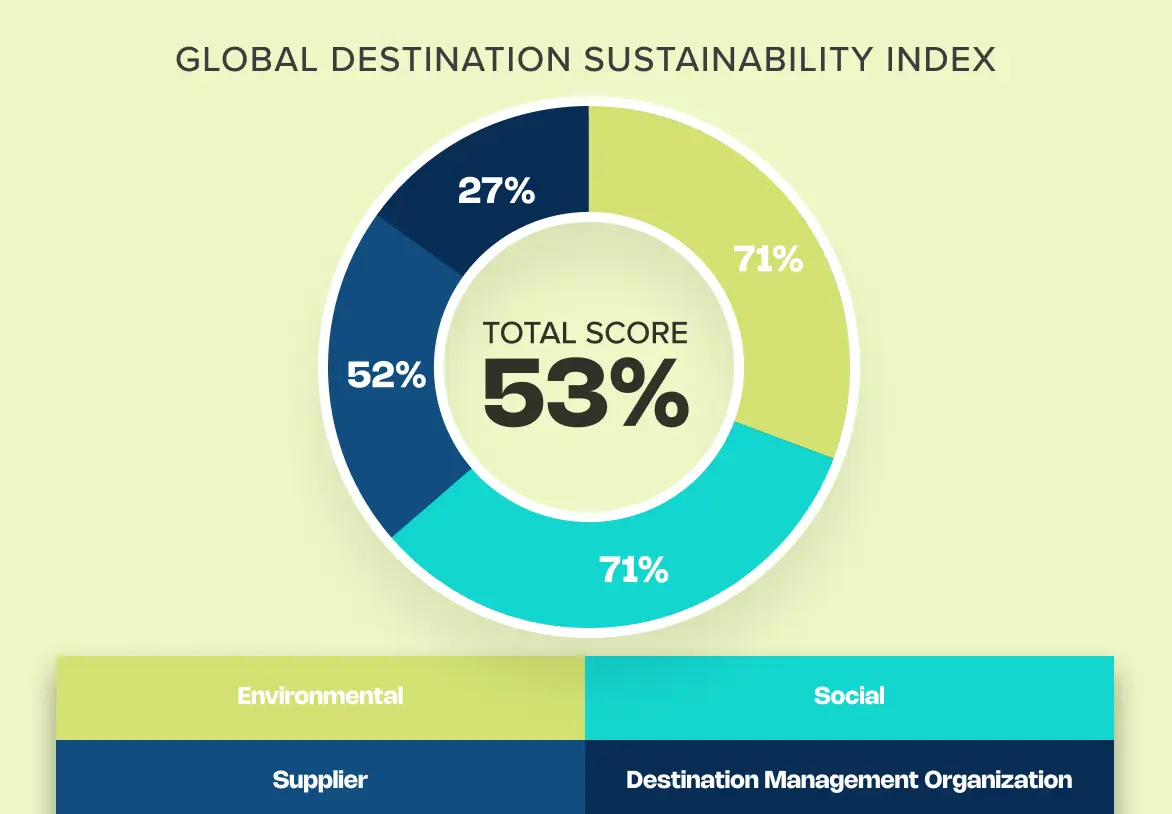
The GDS-Index benchmarks destination sustainability performance and improvement.
The 2023 GDS-Index measures 60+ indicators across the four categories represented in this graph. Overall, Vancouver ranked 26% higher than the average North American destination, and 8% higher than that of Eastern Europe.
Sustainable Future through third-party programs and accreditations
This badge recognises businesses that have had their accessibility features independently reviewed and verified by the AccessNow platform, giving users reliable information about barrier-free access. It helps visitors with mobility, sensory or other needs make informed decisions about locations, knowing that accessibility details have been vetted. By earning the AccessNow Verified label, a business demonstrates transparency and a commitment to inclusive experiences and accessibility for all.
B Corp Certification is a designation that a business is meeting high standards of verified performance, accountability, and transparency on factors from employee benefits and charitable giving to supply chain practices and input materials. In order to achieve certification, a company must:
Demonstrate high social and environmental performance by achieving a B Impact Assessment score of 80 or above and passing our risk review. Multinational corporations must also meet baseline requirement standards.
Make a legal commitment by changing their corporate governance structure to be accountable to all stakeholders, not just shareholders, and achieve benefit corporation status if available in their jurisdiction.
Exhibit transparency by allowing information about their performance measured against B Lab’s standards to be publicly available on their B Corp profile on B Lab’s website.
GreenStep’s Sustainable Tourism Pathway provides tourism businesses with a formal assessment and a badge that showcases their achievement level, along with tools and support to help them advance on their sustainability journey. Businesses can achieve Level 1 through 5, depending on their results after a 1:1 assessment with GreenStep The Pathway assessment is based on our GSTC-recognized criteria and compliant with Travalyst. For tourism businesses that need an accredited certification to be compliant with the GSTC, this program offers a pathway to preparing for that process.
The network of Certified Social Enterprises, are businesses that sell goods or services, embed a social, cultural or environmental purpose into the business, and reinvest the majority of profits into their purpose. Social enterprises compete with traditional for-profit businesses, but use profits to invest in vibrant, healthy communities. Purchasers are increasingly putting a social value into their purchasing criteria, and they are asking for verification. An enterprise that has verified its social impact with Buy Social Canada Social Enterprise Certification, shows stakeholders, clients, and their team that they invest and contribute to community wellbeing.
The EIC Sustainable Event Standards are a collection of standards that assess events and industry suppliers on a wide range of sustainability criteria in support of environmental and social responsibility. The standards have been developed for: Venue, Accommodation, Audio Visual & Production, Destination, Event Organizer, Exhibition services, Food & Beverage and Integrated Property. Each standard includes criteria in the following areas: Organisational Management, Marketing, Communication, and Engagement, Climate Action, Water Management, Materials and Circularity, Supply Chain Management, Diversity, Equity, and Inclusion, Accessibility & Social Impact.
Leadership in Energy and Environmental Design or LEED® is an international symbol of sustainability excellence and green building leadership. LEED’s proven and holistic approach helps virtually all building types lower carbon emissions, conserve resources, and reduce operating costs by prioritizing sustainable practices. Projects earn points across in six areas of human and environmental health: location & transportation, sustainable site development, water savings, energy efficiency, materials selection and indoor environmental quality. Buildings can be certified for Building & Construction, Interior Design and Construction, Operation and Maintenance to achieve the levels: Certified, Silver, Gold and Platinum to demonstrate high performing sustainable buildings.
The Indigenous-owned designation is awarded to tourism businesses that are at least 51% owned and operated by Indigenous individuals or organizations. This designation assures visitors that their choice to support these businesses directly contributes to successful and self-determined Indigenous and First Nations participation in the BC tourism industry.
Offered by the Rick Hansen Foundation, this certification rates and certifies the level of meaningful access of buildings and sites beyond code, assessing mobility, vision, hearing and other disability types. It provides a rating scale that helps organisations understand current barriers and demonstrate progress toward full inclusion and accessibility. Certified sites signal leadership in equity, inclusion and human-centred design — making spaces more welcoming and usable for everyone.
BC Green Business has been empowering businesses to raise the bar for what it means to be environmentally and socially responsible since 2013. They work one-on-one to identify affordable and practical ways to reduce environmental impact. A community of changemakers: Shifting to a sustainable and regenerative future is a journey, and every business can make a positive difference. BC Green Business is about continuous improvement and recognizing businesses who are taking action. Over the years, we are proud to have cultivated a tight-knit community that is shaking up business as usual. Our members share our values – sustainability, leadership, and accountability to each other and the planet.
Internationally recognized, the Biosphere certification helps you demonstrate your commitment to sustainability according to the 17 Sustainable Development Goals of the United Nations. Create and certify your personalized sustainability plan in a process of continuous improvement: With ESG criteria connected with the 17 SDGs. With indicators designed with UN-SDSN. In compliance with international and European directives. Recognizing your good practices in real time.
Rainbow Registered is a national accreditation for 2SLGBTQI+ friendly businesses and organizations. Participating business or organization meet a stringent set of standards to ensure that 2SLGBTQI+ customers feel more welcomed and accepted. Accredited businesses are deemed market-ready for the 2SLGBTQI+ customer and given the right to be associated with the program’s prestigious Rainbow Registered designation.
ISO 14001 is an international standard for an environmental management system (EMS) that helps organizations identify, control and continuously improve their environmental performance. Certification shows that a business has implemented a structured, systematic framework for managing environmental risks and opportunities, including compliance, resource use and emissions. It is applicable across industries and helps embed sustainability into organizational governance.
The Ocean Wise Sustainable Seafood program is a conservation initiative that certifies restaurants and retailers committed to sourcing seafood that is fished or farmed in responsible, sustainable ways. Membership means the organization uses the Ocean Wise symbol to help consumers identify ocean-friendly choices, supporting healthier marine ecosystems and responsible seafood supply chains.
The Authentic Indigenous Designation highlights businesses that provide genuine cultural experiences, support their communities, and prioritize sustainability. This means visitors can engage with Indigenous cultures meaningfully and respectfully, knowing their visit helps preserve traditions, empower local communities, and protect the environment.
Based on the results of the Green Key Global assessment, which includes nearly 200 questions divided into five operational area. Lodging facilities are awarded a rating from 1 to 5 Keys, with 5 Keys being the highest attainable rating. This rating system provides guests with a clear understanding of a facility's commitment to environmental responsibility.
For organization level for quantification and reporting of greenhouse gas emissions and removals. Specifies principles and requirements at the organization level for the quantification and reporting of greenhouse gas (GHG) emissions and removals. It includes requirements for the design, development, management, reporting and verification of an organization's GHG inventory.
The BOMA BEST building certification program is an internationally recognized certification program and provides building management tools for sustainable and smart buildings. Our vision is a future where every existing building embraces sustainability, innovation, and operational excellence. BOMA BEST equips building owners, managers, and operators with the tools required to optimize performance, enhance efficiency, and drive innovation—ensuring buildings are not only high-performing but also healthier, smarter and more resilient for the people who live, work, and play in them.
ISO 20121:2024 is the updated international sustainable event management, guiding organizations to seamlessly integrate sustainability into every facet of their event planning and execution. Certification ensures events are designed and managed with awareness of impacts, stakeholder involvement and continual improvement in sustainability outcomes. It enables organisations to demonstrate leadership in responsible event production.
The Original Original Mark created and managed by Indigenous Tourism Canada, it helps travellers easily and reliably recognize Indigenous-owned tourism businesses across Canada. The revenue generated by these businesses flows back to Indigenous families and communities, helping to build economic independence and pride in culture.
This badge recognises businesses that have had their accessibility features independently reviewed and verified by the AccessNow platform, giving users reliable information about barrier-free access. It helps visitors with mobility, sensory or other needs make informed decisions about locations, knowing that accessibility details have been vetted. By earning the AccessNow Verified label, a business demonstrates transparency and a commitment to inclusive experiences and accessibility for all.
Offered by the Rick Hansen Foundation, this certification rates and certifies the level of meaningful access of buildings and sites beyond code, assessing mobility, vision, hearing and other disability types. It provides a rating scale that helps organisations understand current barriers and demonstrate progress toward full inclusion and accessibility. Certified sites signal leadership in equity, inclusion and human-centred design — making spaces more welcoming and usable for everyone.
Based on the results of the Green Key Global assessment, which includes nearly 200 questions divided into five operational area. Lodging facilities are awarded a rating from 1 to 5 Keys, with 5 Keys being the highest attainable rating. This rating system provides guests with a clear understanding of a facility's commitment to environmental responsibility.
B Corp Certification is a designation that a business is meeting high standards of verified performance, accountability, and transparency on factors from employee benefits and charitable giving to supply chain practices and input materials. In order to achieve certification, a company must:
Demonstrate high social and environmental performance by achieving a B Impact Assessment score of 80 or above and passing our risk review. Multinational corporations must also meet baseline requirement standards.
Make a legal commitment by changing their corporate governance structure to be accountable to all stakeholders, not just shareholders, and achieve benefit corporation status if available in their jurisdiction.
Exhibit transparency by allowing information about their performance measured against B Lab’s standards to be publicly available on their B Corp profile on B Lab’s website.
BC Green Business has been empowering businesses to raise the bar for what it means to be environmentally and socially responsible since 2013. They work one-on-one to identify affordable and practical ways to reduce environmental impact. A community of changemakers: Shifting to a sustainable and regenerative future is a journey, and every business can make a positive difference. BC Green Business is about continuous improvement and recognizing businesses who are taking action. Over the years, we are proud to have cultivated a tight-knit community that is shaking up business as usual. Our members share our values – sustainability, leadership, and accountability to each other and the planet.
For organization level for quantification and reporting of greenhouse gas emissions and removals. Specifies principles and requirements at the organization level for the quantification and reporting of greenhouse gas (GHG) emissions and removals. It includes requirements for the design, development, management, reporting and verification of an organization's GHG inventory.
GreenStep’s Sustainable Tourism Pathway provides tourism businesses with a formal assessment and a badge that showcases their achievement level, along with tools and support to help them advance on their sustainability journey. Businesses can achieve Level 1 through 5, depending on their results after a 1:1 assessment with GreenStep The Pathway assessment is based on our GSTC-recognized criteria and compliant with Travalyst. For tourism businesses that need an accredited certification to be compliant with the GSTC, this program offers a pathway to preparing for that process.
Internationally recognized, the Biosphere certification helps you demonstrate your commitment to sustainability according to the 17 Sustainable Development Goals of the United Nations. Create and certify your personalized sustainability plan in a process of continuous improvement: With ESG criteria connected with the 17 SDGs. With indicators designed with UN-SDSN. In compliance with international and European directives. Recognizing your good practices in real time.
The BOMA BEST building certification program is an internationally recognized certification program and provides building management tools for sustainable and smart buildings. Our vision is a future where every existing building embraces sustainability, innovation, and operational excellence. BOMA BEST equips building owners, managers, and operators with the tools required to optimize performance, enhance efficiency, and drive innovation—ensuring buildings are not only high-performing but also healthier, smarter and more resilient for the people who live, work, and play in them.
The network of Certified Social Enterprises, are businesses that sell goods or services, embed a social, cultural or environmental purpose into the business, and reinvest the majority of profits into their purpose. Social enterprises compete with traditional for-profit businesses, but use profits to invest in vibrant, healthy communities. Purchasers are increasingly putting a social value into their purchasing criteria, and they are asking for verification. An enterprise that has verified its social impact with Buy Social Canada Social Enterprise Certification, shows stakeholders, clients, and their team that they invest and contribute to community wellbeing.
Rainbow Registered is a national accreditation for 2SLGBTQI+ friendly businesses and organizations. Participating business or organization meet a stringent set of standards to ensure that 2SLGBTQI+ customers feel more welcomed and accepted. Accredited businesses are deemed market-ready for the 2SLGBTQI+ customer and given the right to be associated with the program’s prestigious Rainbow Registered designation.
The EIC Sustainable Event Standards are a collection of standards that assess events and industry suppliers on a wide range of sustainability criteria in support of environmental and social responsibility. The standards have been developed for: Venue, Accommodation, Audio Visual & Production, Destination, Event Organizer, Exhibition services, Food & Beverage and Integrated Property. Each standard includes criteria in the following areas: Organisational Management, Marketing, Communication, and Engagement, Climate Action, Water Management, Materials and Circularity, Supply Chain Management, Diversity, Equity, and Inclusion, Accessibility & Social Impact.
ISO 14001 is an international standard for an environmental management system (EMS) that helps organizations identify, control and continuously improve their environmental performance. Certification shows that a business has implemented a structured, systematic framework for managing environmental risks and opportunities, including compliance, resource use and emissions. It is applicable across industries and helps embed sustainability into organizational governance.
ISO 20121:2024 is the updated international sustainable event management, guiding organizations to seamlessly integrate sustainability into every facet of their event planning and execution. Certification ensures events are designed and managed with awareness of impacts, stakeholder involvement and continual improvement in sustainability outcomes. It enables organisations to demonstrate leadership in responsible event production.
Leadership in Energy and Environmental Design or LEED® is an international symbol of sustainability excellence and green building leadership. LEED’s proven and holistic approach helps virtually all building types lower carbon emissions, conserve resources, and reduce operating costs by prioritizing sustainable practices. Projects earn points across in six areas of human and environmental health: location & transportation, sustainable site development, water savings, energy efficiency, materials selection and indoor environmental quality. Buildings can be certified for Building & Construction, Interior Design and Construction, Operation and Maintenance to achieve the levels: Certified, Silver, Gold and Platinum to demonstrate high performing sustainable buildings.
The Ocean Wise Sustainable Seafood program is a conservation initiative that certifies restaurants and retailers committed to sourcing seafood that is fished or farmed in responsible, sustainable ways. Membership means the organization uses the Ocean Wise symbol to help consumers identify ocean-friendly choices, supporting healthier marine ecosystems and responsible seafood supply chains.
The Original Original Mark created and managed by Indigenous Tourism Canada, it helps travellers easily and reliably recognize Indigenous-owned tourism businesses across Canada. The revenue generated by these businesses flows back to Indigenous families and communities, helping to build economic independence and pride in culture.
The Indigenous-owned designation is awarded to tourism businesses that are at least 51% owned and operated by Indigenous individuals or organizations. This designation assures visitors that their choice to support these businesses directly contributes to successful and self-determined Indigenous and First Nations participation in the BC tourism industry.
The Authentic Indigenous Designation highlights businesses that provide genuine cultural experiences, support their communities, and prioritize sustainability. This means visitors can engage with Indigenous cultures meaningfully and respectfully, knowing their visit helps preserve traditions, empower local communities, and protect the environment.