Hullo, Vancouver: Making Waves on the Salish Sea
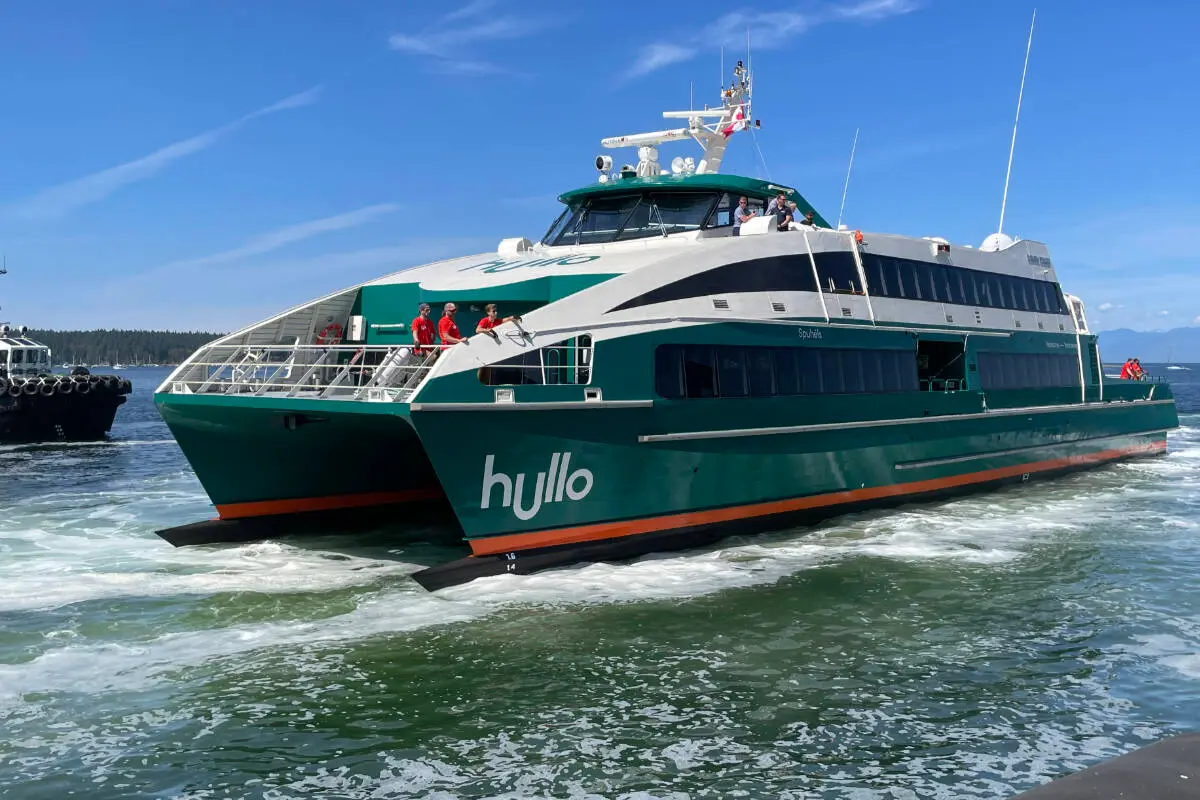
Two years ago, Hullo Ferries set sail with big plans: make travel between Vancouver and Vancouver Island faster, easier, and more enjoyable. Since launching in 2023, the company has already moved a million passengers and is only picking up speed.
We caught up with Xander France, Hullo’s Director of Sales and Marketing, to talk about the company’s early wins, what sets them apart, and where they’re headed next.
A New Kind of Ferry Service
The idea for Hullo Ferries took shape in 2019, when a group of like-minded founders saw an opportunity. While plenty of ways already existed to get between the mainland and the island, they believed something was missing.
“There are seaplanes, which are great but pricey, and BC Ferries, which work well if you’ve got a vehicle,” says France. “But our team saw a gap for a passenger-only service that was downtown to downtown, fast, and accessible.”
Before launching, the team took a close look at what hadn’t worked in the past. They spoke directly with companies that had tried, and failed, to offer similar services. “We learned from their mistakes,” he says. “We knew it could be done differently.”
From day one, the company prioritized community relationships. Hullo began with formal engagement with the Snuneymuxw First Nation, partnered with the Nanaimo Port Authority for a 40-year exclusive route, and secured docking at Vancouver Harbour Flight Centre. By 2022, they were officially in business, and their first passenger sailed in 2023.
The Guest Comes First
Ask Xander France what has defined Hullo’s early success, and he’ll point to the guest experience.
“When I went to the Interferry Conference in 2021, everyone was focused on electrification and sustainability, which is great, and we’re working on that too,” he says. “But no one was talking about guest experience.”
Hullo made it their secret sauce. They recruited staff from cruise lines and luxury hotels. The Director of Guest Experience came from the Marriott brand and Park Hotel. “We brought in people who understand hospitality,” says France. “We wanted this to feel like more than just a bus on the water.”
That mindset shows up in the details, like late-night sailings after Canucks games and concerts, the super-comfy airline-style seating, and the option to return home the same evening instead of paying for a hotel. “You can see a show in Vancouver and still sleep in your own bed on the island. That’s been a game-changer for so many people.”
Changing Travel Habits
The feedback so far has been overwhelmingly positive, and Hullo is seeing the ripple effects in travel patterns. More people are crossing the Salish Sea, and not just for vacations.
“Some are heading to YVR to catch a flight, others are going for medical appointments, cruises, or a quick day trip,” says France. “We’ve had people using it for everything from Dine Out Vancouver to concert nights. It’s providing choice and accessibility for a lot of people.”
Interestingly, this growth isn’t pulling from other services. “We’ve seen our numbers grow while BC Ferries stays steady. That tells us we’re generating new trips and people are traveling more because we’re making it easier.”
Sailing into the Future
Despite their success, the Hullo team still sees themselves as a startup.
“We’re always thinking about iteration and improvement,” says France. “In the short term, we’re working on getting a liquor license, upgrading our onboard food program, and making room for bikes.”
Longer term, expansion is on the horizon. “Our plan has always included a route between Victoria and Vancouver. That means more vessels, more crew, and more reach. But we’re being intentional and scaling the Nanaimo route first.”
And then there’s the FIFA World Cup in 2026.
“That’s a huge opportunity,” France says. “We’re planning for extra sailings and late-night service. It’s an ideal time to show even more people how easy and enjoyable this crossing can be.”
Crossing the Sea, Cutting the Cars
Sustainability is built into the model of Hullo Ferries. The company’s passenger-only approach means fewer vehicles on the road, less congestion, and reduced emissions. “Each vessel holds 350 passengers, and we do 14 sailings a day,” says France. “That’s potentially thousands of cars taken off the road daily.”
They’ve also helped bring car-share options like Evo and Modo to Nanaimo, giving travellers more ways to get around without needing to drive across.
Hullo Ferries may be a recent arrival on our coast, but it’s already reshaping how British Columbians think about travel between the mainland and the island.